

What are schools for?
The Third Parent

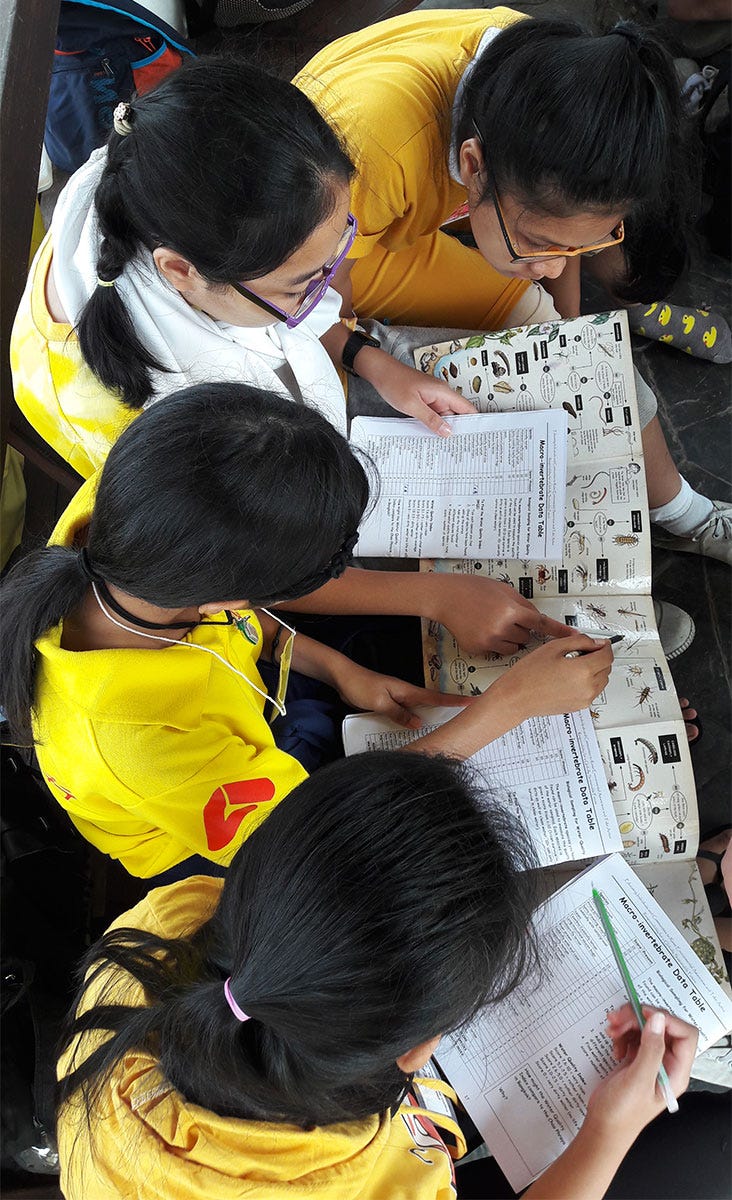
During teacher training, I was shocked to discover that the question, “What are schools for?” was up for debate. I thought it was obvious, and if I’m honest, it wasn’t something I wrestled with. But the argument essentially centers around whether schools exist to cultivate critical thinkers or to produce compliant citizens.
But now we have AI banging on the door. In other words, we’re at a point in history where answering this question becomes important to how we want to shape society and our children’s minds.
When I taught 1st and 2nd grade at a young Waldorf school in Portland, Oregon, one of my parents said, “Teachers are like a third parent.” So, how do we feel about AI (and social media) becoming the third parent? Because right now, when students think no one’s looking, that’s exactly who’s doing the chiseling and sculpting.
My chiseling and sculpting happened on the playground, between my desk partners, and in my relationships with my teachers.
Let’s take the sixth grade for instance. I remember getting yelled at for my poor penmanship in front of the classroom, becoming a sobbing mess, and deciding to check out permanently from Mrs. E’s English class.
I remember befriending the first black girl at our school because, at first, no one would talk to her. Later, she made other friends, and we never hung out again.
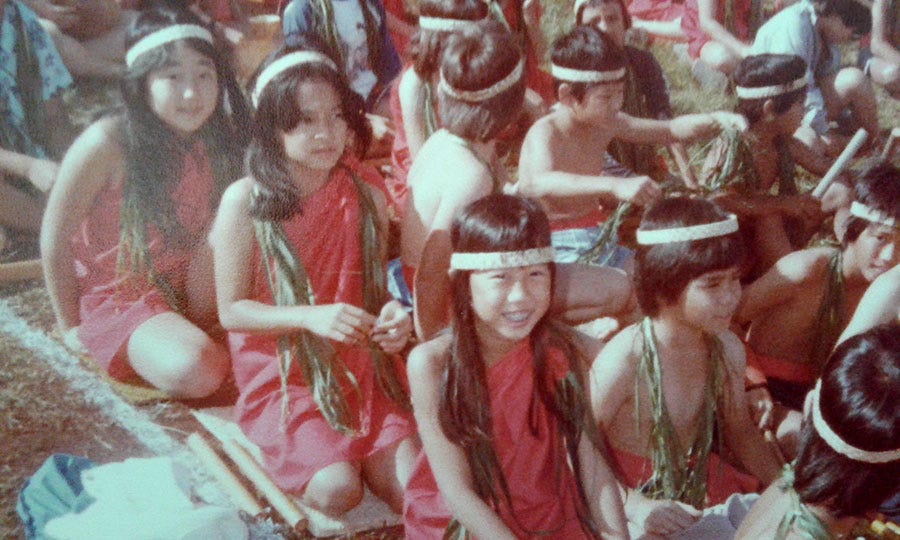
I remember winning a drawing contest for the school’s May Day program. I was teased when I went up to receive the contest form. No one thought I’d win because I wasn’t considered an artist.
And I remember receiving high marks for a standardized statewide test on essay writing. Then, I immediately asked to see my classmates’ in order to compare.
What is it they say? We don’t remember what they did, but how they made you feel.
What these moments carry is something I’ve come to discover throughout the years. The point of schools is to learn how to behave and be around other people. Yes, academic learning matters, but the universe of personalities do, too. If living with family is like running a marathon, schools are where we clock in resistance training.
When I first started teaching English abroad, in 2010, I’d walk into the classroom of students talking to one other, lively, loud. Visiting each other, in groups, pairs, on the floor. Now, they’re seated and barely look up from their phones.
Now, LLMs are changing the landscape of education. Writing, presentations, projects, homework, all of it is being fed into data centers.
So it’s time to rethink what’s the point of school. What do we want that third parent to be in our children’s lives? For as much as AI is amazing, what I continually return to is that AI doesn’t live in reality.
But we do.
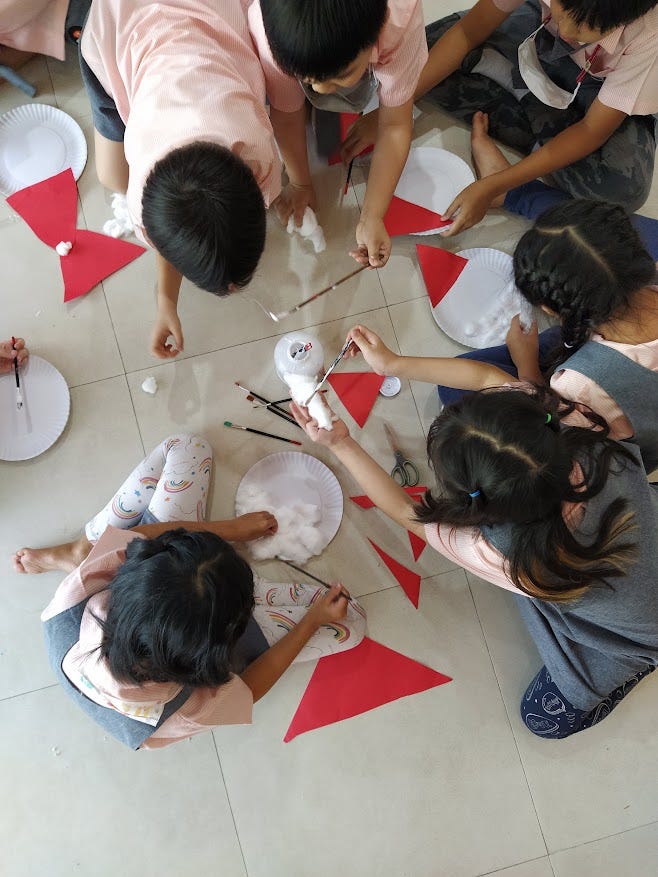
Schools provide a shared reality at a time when our lives are becoming increasingly individualized. It’s one of the few places where children regularly encounter people they didn't choose.
During teacher training, I thought the debate over the purpose of school was purely academic. If AI can explain grammar better than I can and answer any factual question in seconds, then the value of school must lie somewhere else. Perhaps it has all along. Perhaps classrooms matter because they’re one of the few places left where we don’t just learn about the world ~ we learn how to live in it, together.
A thoughtful piece, Lani. I don't want to see children simply instructed by AI or babysat by robots (when they finally learn to walk upstairs and open doors, etc.). But I wouldn't mourn the passing of what I think of as the industrial model of education that prevails, shipping kids into the confines of an institution at 5 or 6 and then loading them into trains or trucks off universities or jobs at 18. It can be a wonderful experience, I'm sure, and some socialisation does take place, even a bit of learning. But it strikes me that the model belongs to another age - the factory age - and we need a better one, along with new models for working and doing politics. So there's not much to do....
Hi Lani, l agree, schools are about relationships… and it wasn’t often in my classroom experience that students didn’t want to show you what they had learned, when the learning environment was safe and supportive. Curiosity and the desire to learn is who we are, and unfortunately the system at large rewards individual achievement over collaboration.
Of the system, l do believe it is manufactured to “produce compliant citizens”, and a ‘good’ teacher will “cultivate critical thinkers”, starting with what is governing them … schools are snapshots of the broader community.
We, teachers, are third parents for sure - l sometimes found it frustrating that the general consensus is that people assume they know what teachers do, because they have all been in classrooms … and a ‘good’ teacher really is worth their weight in gold, like a ‘good’ sociologist, doctor, psychologist, cop etc. the title doesn’t really mean much, does it? There is plenty of mediocrity out there too.
The A1 scares me a bit, a lot actually … l have sat through school assemblies where the leaders have read speeches spat out by A1, so l worry about the future of education … perhaps it will be the push for systemic change … it would be good to see the day that education wasn’t a political football.
As you say, “academic learning matters, but the universe of personalities do too”. There, l have had my rave for the day. Thanks for this thought provoking piece. Sending love … have a great day at school. 🙏🌀💖